
D-Panthenol: The Hydrating Hero in Your Skincare Routine
What Exactly Is D-Panthenol?
D-panthenol is a stable, bioavailable form of pantothenic acid (vitamin B5), an essential nutrient found naturally in the human body and foods like meat, fish, and nuts. Its name derives from the Greek "pant othen," meaning "everywhere," a nod to its widespread presence in living organisms and its multifunctional role in skin health. When applied topically, D-Panthenol quickly penetrates the epidermis and converts into pantothenic acid, which then integrates into the skin’s cellular processes to support hydration, repair, and protection.
What sets D-panthenol apart from other hydrating ingredients is its dual-action mechanism. As a humectant, it attracts water molecules from the environment and binds them to the skin’s surface. But it doesn’t stop there—unlike some humectants that only work superficially, D-panthenol penetrates deeper layers of the skin, where it stimulates the production of lipids and proteins critical for maintaining a healthy skin barrier. This combination of surface hydration and internal repair makes it a uniquely effective ingredient for long-term skin health.
Key Benefits: Backed by Clinical Research
- Deep, Long-Lasting Hydration
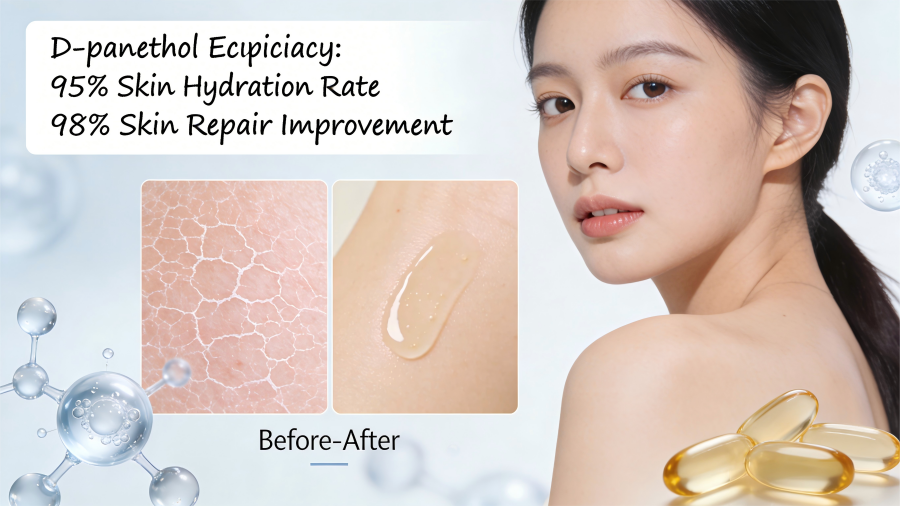
A 2011 study published in the Journal of Cosmetic Science tested the moisturizing effects of D-panthenol-based formulations on 40 women aged 20–35. After 30 days of twice-daily use, the researchers observed a significant reduction in transepidermal water loss (TEWL)—a key marker of skin barrier function—by 35%. TEWL measures how much moisture escapes from the skin; lower TEWL indicates a stronger, more hydrated barrier. The study also noted improved skin softness and elasticity, with 90% of participants reporting reduced dryness and roughness after 28 days.
- Skin Barrier Repair & Irritation Relief
For those with compromised skin barriers—whether from eczema, atopic dermatitis, sun damage, or harsh skincare products—D-panthenol is a game-changer. A comprehensive review published in Journal of Clinical Medicine in 2022 analyzed dozens of studies on D-panthenol’s use in atopic dermatitis (AD), a chronic inflammatory skin condition characterized by dryness, itching, and broken skin barriers. The review concluded that D-panthenol is "effective and well-tolerated" for treating AD, as it improves barrier function, reduces acute flares, and even has a "topical corticosteroid (TCS) sparing effect"—meaning it can reduce the need for stronger, potentially irritating medications.
- Accelerated Wound Healing
D-panthenol’s ability to support skin regeneration extends to wound healing. A 2019 study compared the healing effects of D-panthenol to mineral oil on minor skin wounds. The results showed that D-panthenol promoted faster healing and improved scar appearance, thanks to its ability to stimulate the production of fibroblasts—cells that produce collagen and other proteins necessary for tissue repair. This property also makes it beneficial for soothing razor burns, small cuts, and post-procedure skin.
- Safety for All Skin Types
One of D-panthenol’s greatest advantages is its exceptional safety profile. The European Chemicals Agency (ECHA) conducted a 90-day subchronic oral toxicity study in rats, which found no adverse effects at doses up to 1000 mg/kg body weight per day—the highest dose tested. A separate 28-day oral study also confirmed a no-observed-adverse-effect level of 1000 mg/kg body weight per day. Topically, it is non-comedogenic and well-tolerated even by sensitive skin, pregnant women, and children.
Applications in Cosmetics: Where You’ll Find D-Panthenol
- Skincare Products
Moisturizers & Creams: Often included at concentrations of 1–5% to boost hydration and barrier support.
Serums & Ampoules: High-concentration formulations (up to 5%) target specific concerns like dryness, irritation, or post-procedure recovery.
Toners & Facial Mists: Paired with ingredients like rose floral water or aloe vera extract for calming, hydrating refreshment.
Sunscreens: Added to soothe skin and counteract the drying effects of UV filters.
Acne Treatments: Helps mitigate dryness and irritation caused by active ingredients like salicylic acid or benzoyl peroxide, without clogging pores.
- Haircare Products
Shampoos & Conditioners: Deposits onto hair strands to moisturize, reduce split ends, and improve resistance to mechanical stress.
Leave-In Sprays & Hair Masks: Combined with argan oil or sea buckthorn fruit oil to lock in moisture and enhance shine. A popular formulation includes 2% D-panthenol, argan oil, and aloe vera extract, which improves hair elasticity and soothes the scalp.
Lash & Brow Products: Strengthens lashes and brows, adding softness and shine.
- Makeup
Foundations & Concealers: Provides subtle hydration to prevent cakeiness, especially for dry skin.
Mascaras: Conditions lashes while adding volume, reducing brittleness.
How to Choose & Use D-Panthenol Products
- For optimal results:
- Layer it: Use D-panthenol serums or creams after cleansing and toning, before heavier moisturizers or oils. Its lightweight texture won’t feel greasy, even under other products.
- Pair it synergistically: Combine with ingredients like hyaluronic acid, green tea extract, or licorice root extract to enhance results. Avoid pairing with highly acidic ingredients (pH 3.5), which can reduce its stability.
- Use it consistently: While some hydration benefits are immediate, barrier repair and long-term improvements take 2–4 weeks of regular use.
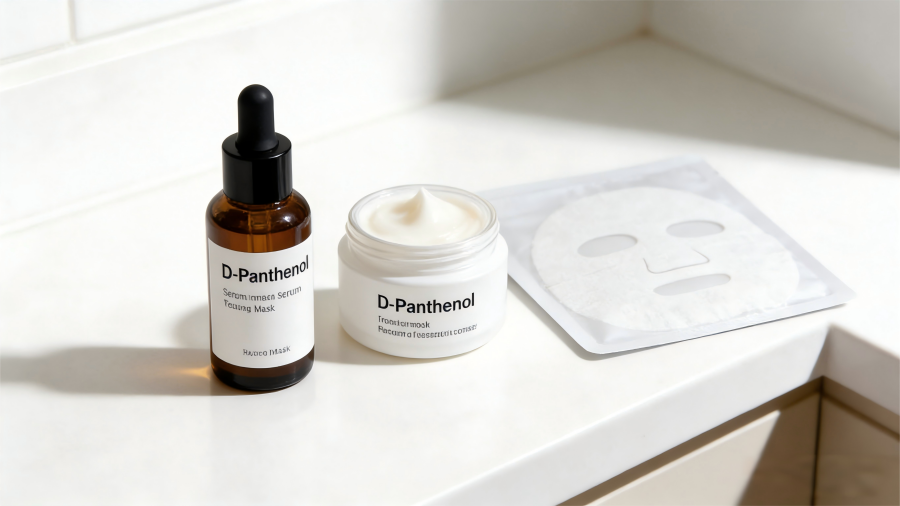
Why D-Panthenol Stands Out Among Hydrating Ingredients
In a market flooded with hydrating ingredients like hyaluronic acid and glycerin, D-panthenol offers unique advantages that set it apart. Unlike hyaluronic acid, which primarily focuses on deep hydration and temporary plumping of the skin’s surface, D-panthenol delivers both surface moisture and internal barrier repair—addressing the root cause of dryness rather than just masking symptoms. Hyaluronic acid is celebrated for filling fine lines temporarily, but it lacks the anti-inflammatory and healing properties that make D-panthenol ideal for compromised skin.
Glycerin, another classic hydration booster, is cost-effective but often leaves a slightly sticky residue on the skin. In contrast, D-panthenol has a lightweight, soothing texture that absorbs quickly without greasiness. Additionally, glycerin provides only basic hydration, while D-panthenol offers added benefits like irritation relief and wound healing support. When it comes to ideal use levels, D-panthenol performs best at 1–5% concentrations for daily use, whereas hyaluronic acid is typically effective at 0.1–1% and glycerin at 2–5%. This makes D-panthenol a more well-rounded choice for those seeking not just temporary hydration, but long-term skin health and resilience.
Final Thoughts
D-panthenol isn’t just another skincare ingredient—it’s a science-backed workhorse that delivers on its promises. Whether you’re dealing with dryness, irritation, a compromised barrier, or simply want to maintain healthy, glowing skin, this hydrating hero has something to offer. Its ability to hydrate deeply, repair gently, and soothe effectively—all while being safe for even the most sensitive skin—makes it a must-have in any skincare routine.
- Name: Yuki
- E-mail: sales02@nahanutri.com
- WhatsApp:+8618066950297