
PEG-6 Caprylic/Capric Glycerides: The Multitasking Emulsifier in Your Beauty Products
What Exactly Are PEG-6 Caprylic/Capric Glycerides? Breaking Down the Name
To understand this ingredient, let's break down its name into simpler parts:
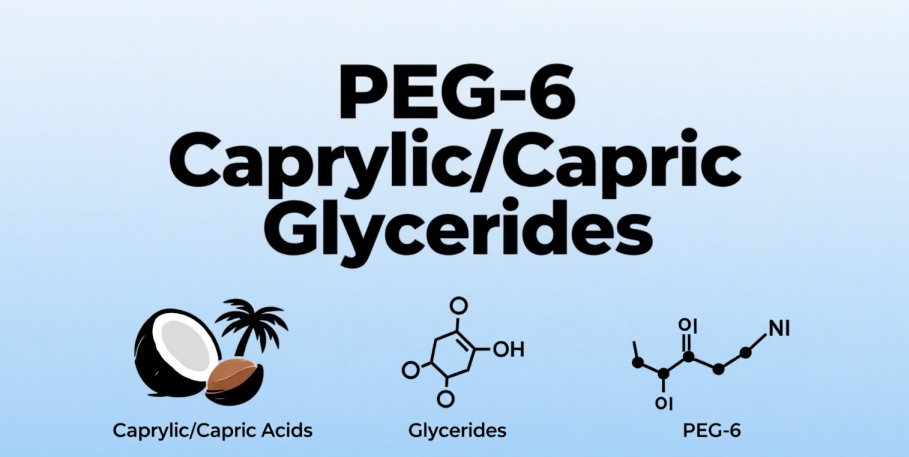
Caprylic and Capric Acids: These are medium-chain fatty acids naturally derived from coconut oil or palm kernel oil. They are known for their light texture and excellent skin-feel.
Glycerides: This refers to Glycerin, a well-known humectant and skin-conditioning agent. When fatty acids are attached to a glycerin molecule, they form a "glyceride."
PEG-6: This stands for Polyethylene Glycol-6. It indicates that the glyceride molecule has been ethoxylated, meaning it has been reacted with ethylene oxide. The number "6" refers to the average number of ethylene oxide units. This process is crucial because it makes the final molecule partly water-soluble (hydrophilic) and partly Oil-soluble (lipophilic).
In simple terms, PEG-6 Caprylic/Capric Glycerides is created by combining coconut-derived fatty acids with glycerin and then modifying the molecule to become an effective emulsifier. It is typically a pale yellow liquid with a mild characteristic odor.
Key Properties and Functional Advantages: Why Formulators Love It
This ingredient is a staple in cosmetic chemistry due to its unique set of properties:
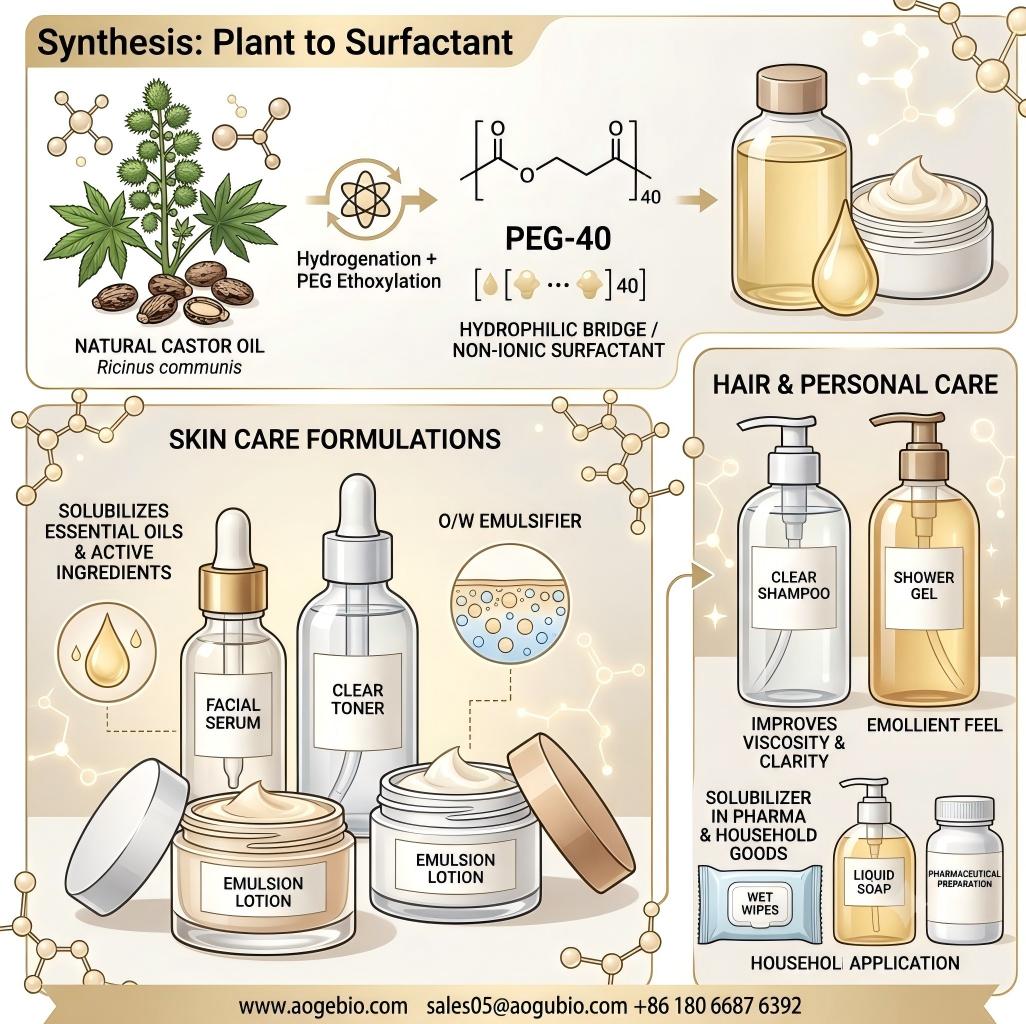
- Excellent Emulsifying Power: Its primary role is as an oil-in-water (O/W) emulsifier. This means it helps to disperse tiny droplets of oil evenly throughout a water-based formula. This prevents the oil and water phases from separating, ensuring the product remains homogenous and stable throughout its shelf life. It creates stable emulsions with a fine, smooth texture.
- Superb Solubilizing Agent: Beyond emulsions, it is exceptional at solubilizing hydrophobic (oil-soluble) materials into clear, water-based products. This is vital for incorporating fragrances, essential oils, and certain active ingredients (like vitamins or botanical extracts) into toners, serums, and clear gels without making them cloudy.
- Light and Non-Greasy Skin Feel: Unlike some heavier emulsifiers, those based on caprylic/capric acids impart a remarkably light, silky, and non-greasy feel to the skin. This makes it ideal for formulations targeting oily skin or for products where a weightless finish is desired, such as day creams, serums, and lotions.
- Enhanced Bioavailability: By solubilizing oil-soluble active ingredients, it can help improve their dispersion and potentially enhance their delivery and absorption into the skin, making them more effective.
- Safety and Compatibility: It is considered safe for use in cosmetics and is well-tolerated by the skin at concentrations commonly used in formulations. It is also compatible with a wide range of other cosmetic ingredients, making it a flexible tool for chemists.
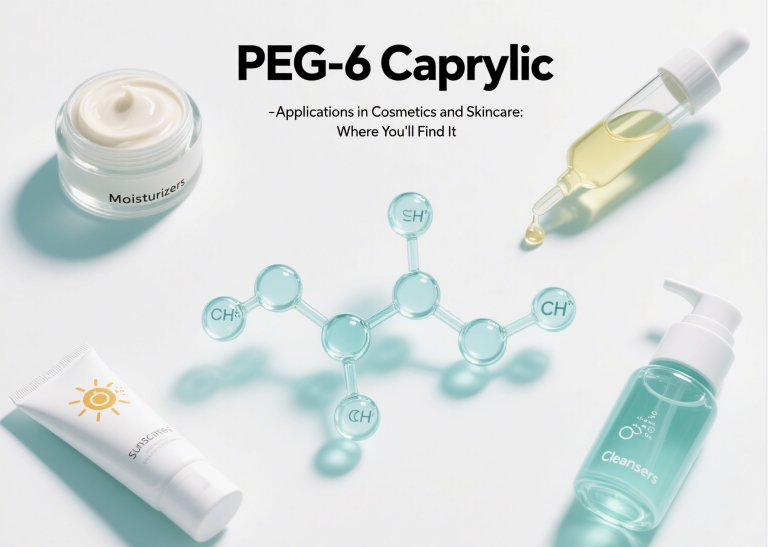
Applications in Cosmetics and Skincare: Where You'll Find It
The versatility of PEG-6 Caprylic/Capric Glycerides allows it to be used in a vast array of product categories. Consumers can find it on the ingredient list (INCI) of many common products:
- Skin Care Products:
Moisturizers: Used in day creams, night creams, and lotions to create stable, light-textured emulsions that absorb quickly.
Serums: Essential for creating clear, water-based serums that carry oil-soluble active ingredients (e.g., Vitamin E, CoQ10, retinoids) in a stable solution.
Sunscreens: Helps to solubilize certain oil-soluble UV filters, ensuring an even distribution on the skin for consistent protection and a less greasy feel.
Cleansers: Used in some water-soluble cleansing oils and micellar waters to help solubilize oils and makeup, allowing them to be rinsed away with water.
- Hair Care Products:
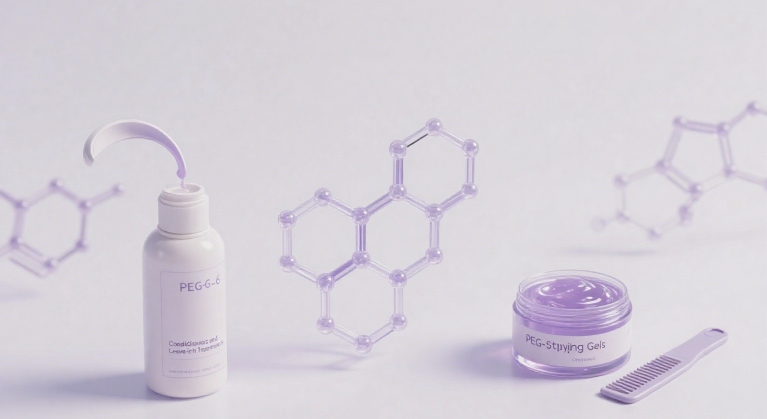
Conditioners and Leave-in Treatments: Provides a light conditioning effect without heavy buildup, improving hair manageability and shine.
Styling Gels: Helps to incorporate conditioning oils and fragrances into clear hydro-alcoholic gels.
- Decorative Cosmetics:
Liquid Foundations: Helps to create stable, smooth emulsions with even pigment dispersion for a flawless application.
Mascara and Eyeliners: Can be used to stabilize formulations and ensure smooth application.
- Fragrances:
Perfumes and Colognes: Acts as a solubilizer to incorporate fragrance oils into alcohol-free or water-based formats.
Safety and Considerations
PEG-6 Caprylic/Capric Glycerides has a strong safety profile as a cosmetic ingredient. The Cosmetic Ingredient Review (CIR) Expert Panel, an independent scientific authority, has assessed the safety of PEG derivatives and concluded that they are safe for use in cosmetics in the present practices of use and concentration.
However, it is important to address common concerns about "PEGs":
Purity: The ingredient is highly purified during manufacturing to remove potential impurities like 1,4-dioxane. Reputable suppliers adhere to strict quality control standards to ensure its safety.
Skin Sensitivity: While generally non-irritating, as with any ingredient, there is always the potential for individual sensitivity or allergy, though this is rare.
A review of the toxicological data in the International Journal of Toxicology (Fiume et al., 2012) on various PEG derivatives used in cosmetics supported their safety, noting that the potential for skin irritation or sensitization is low.
As always, consumers with specific concerns or known sensitivities should patch test new products and consult with a dermatologist.
Conclusion: The Invisible Architect of Modern Cosmetics
PEG-6 Caprylic/Capric Glycerides is a perfect example of cosmetic science creating ingredients that solve practical problems. It allows formulators to create products that are not only stable and effective but also deliver the luxurious, lightweight sensory experiences that consumers demand. By seamlessly blending oil and water, it enables the incorporation of beneficial ingredients into elegant formulations.
- Name: Jeremy Ma
- Email: sales05@aogubio.com
- WhatsApp: +86 18066876392